What Really Happened in the Snohomish County Housing Market in 2025, and How It Stacks Up to the Past
If you own a home in Snohomish County, or you’re thinking about buying or selling, you probably felt how 2025 was a year of adjustment in the housing market. The year didn’t bring a dramatic crash or a sudden boom. Instead, it marked a clear transition from the fast-paced, emotional market of recent years to something more measured, strategic, and intentional.
This year-in-review breaks down how the housing market started in early 2025, how it shifted as the year progressed, and how those changes compare to the past five years, all through a Snohomish County lens. More importantly, you’ll see what these trends mean for your home value and your next move.
How the Housing Market Started in Early 2025
The Snohomish County housing market entered 2025 with momentum carried over from 2024. Home prices were still elevated, inventory remained tight, and sellers continued to hold the upper hand.

At the beginning of the year, buyer demand stayed strong, driven by steady employment, population growth, and long-term confidence in the Puget Sound region. However, affordability pressures were already shaping behavior. Mortgage rates hovered in the high-6% to low-7% range, which forced buyers to be more budget-conscious and selective.
What defined early 2025?
Home prices were still rising, though at a slower pace than prior years
Inventory increased modestly, but not enough to balance demand
Homes sold quickly when priced correctly and well-presented
Buyers hesitated more, especially at higher price points
While this was still a seller-favored market, it lacked the urgency of the 2021–2022 frenzy. Buyers no longer felt compelled to waive every contingency or stretch far beyond their comfort zone. That shift set the tone for the rest of the year.
How the Market Shifted as 2025 Progressed
As spring and summer arrived, the housing market began to recalibrate.
More homeowners decided to list, especially those who had delayed selling during rate volatility. New construction also contributed additional supply in cities like Lake Stevens, Marysville, and parts of Bothell. As a result, active inventory rose noticeably by mid-to-late 2025.
This increase didn’t flip the market into buyer territory, but it did soften conditions.
What changed in the second half of 2025?
Homes stayed on the market longer, averaging closer to 30–40 days
Price reductions became more common, especially for over-priced listings
Negotiations returned, including inspection repairs and closing credits
Buyers gained leverage, particularly in mid-range and higher price points
By fall, home price growth flattened, and in some areas prices dipped slightly year-over-year. This wasn’t a sign of weakness, it was a natural correction after years of aggressive appreciation.
For homeowners, this meant equity largely held steady. For buyers, it meant the ability to make thoughtful, well-structured offers instead of emotional ones.
How 2025 Compares to the Past Five Years
To fully understand 2025, it helps to view it in context.
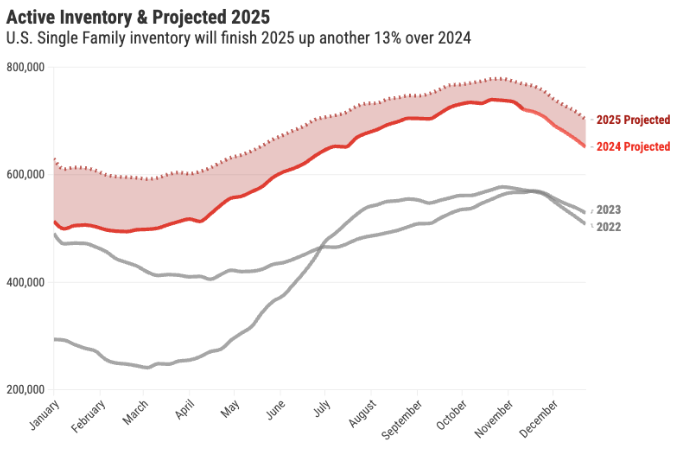
2020–2021: The Unprecedented Boom
Ultra-low interest rates and pandemic-driven relocation created explosive demand. Prices surged, inventory vanished, and competition reached historic levels. Sellers dictated every term.
2022: The Reality Check
Rising interest rates slowed demand rapidly. Prices stabilized and even dipped in some Snohomish County neighborhoods as affordability tightened.
2023–2024: Stabilization
The market found its footing. Prices rose at a more sustainable pace, inventory remained limited, and buyer demand stayed consistent despite higher rates.
2025: The Rebalancing Year
Unlike earlier years, 2025 wasn’t defined by extremes. Instead, it marked a transition to a more normalized housing market:
Slower, but healthier, price movement
Increased inventory without oversupply
More balanced buyer and seller expectations
Compared to the emotional swings of recent years, 2025 felt calmer, more predictable, and more rational.
City-by-City Insights Across Snohomish County
Real estate is always local, and 2025 proved that once again.
Bothell remained competitive due to proximity to major employment hubs
Lake Stevens and Marysville benefited from relative affordability and new construction
Everett saw steady demand but more price sensitivity
Lynnwood experienced modest cooling as inventory increased
These variations highlight why county-wide headlines never tell the full story. Neighborhood-level trends matter more than ever.
If you’re evaluating your position, a localized analysis, like a Neighborhood Guide or personalized valuation, is far more useful than national averages.
What 2025 Means for Homeowners Thinking About Selling
If you’re considering selling your home, 2025 delivered an important lesson: pricing and preparation matter again.
You can no longer rely on buyer urgency alone. Homes that sold fastest in 2025 shared common traits:
Accurate pricing based on current market data
Strong presentation, staging, and condition
Strategic marketing, not “test-the-market” pricing
Overpriced homes often lingered, requiring reductions that ultimately weakened negotiating power.
Bottom line: You can still sell successfully, but strategy beats shortcuts.
What 2025 Means for Buyers
For buyers, 2025 opened a door that had been closed for years.
You likely noticed:
Less competition on many listings
The return of inspection and financing contingencies
More room to negotiate repairs or credits
That said, well-priced homes in desirable areas still moved quickly. Preparation remained critical.
Smart buyer strategies that worked in 2025:
Getting fully pre-approved early
Staying flexible on timing and location
Acting decisively on the right home
If interest rates ease in the coming year, competition could intensify again. Buyers who move strategically, not reactively, are best positioned.
A Local Case Study: Navigating the 2025 Market Successfully
A Snohomish County homeowner listed their Everett property in summer 2025. Rather than pricing aggressively based on past peaks, they worked with a data-driven listing strategy.
The home sold within three weeks at market value, with minor negotiated repairs—but no major concessions.
The same sellers then purchased a larger home with inspection protections and seller-paid repairs, something that would have been nearly impossible just a few years earlier.
The lesson: 2025 favored informed decisions on both sides of the transaction.
Frequently Asked Questions
Was 2025 a buyer’s or seller’s market in Snohomish County?
It remained seller-favored, but noticeably more balanced than previous years.
Did home prices drop in 2025?
Prices largely flattened, with small declines in some areas and stability in others.
Are buyers negotiating again?
Yes. Inspections, credits, and price adjustments became common again.
Is now a good time to sell?
If priced correctly and prepared well, yes. Demand remains strong.
Where can I track reliable housing data?
The National Association of Realtors provides trusted housing research and market insights:https://www.nar.realtor
What Comes Next, and What You Should Do Now
2025 marked a turning point for the Snohomish County housing market. It shifted expectations, restored balance, and rewarded informed decision-making.
Whether you’re planning to sell, buy, or simply understand your home’s value, clarity is your biggest advantage.
Start with a personalized Home Valuation
Explore local trends with a Neighborhood Guide
Build a plan with a proven Listing Strategy
If you want guidance tailored to your goals, The Serviss Group is here to help you move forward with confidence, backed by local expertise and real market insight. Contact us today!